


Septic Systems in The Acreage FL — What Buyers Should Know Before Purchasing
Every home in The Acreage runs on a private septic system. For buyers coming from municipal sewer service, understanding how these systems work, what to inspect, and what failure costs before closing is essential preparation.
☎️ 561-201-4717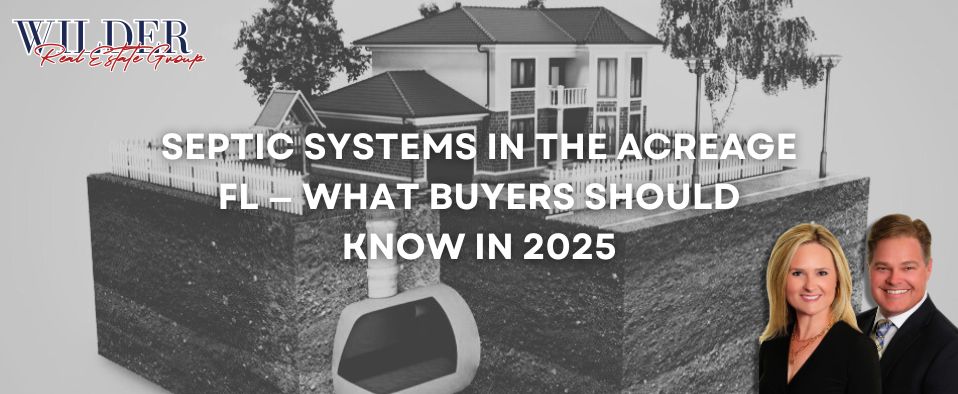
Virtually every home in The Acreage and unincorporated Loxahatchee operates on a private septic system rather than municipal sewer. This isn’t a drawback — well-maintained septic systems are reliable and cost-effective. But they require specific inspection steps during due diligence, operate under Florida regulations that affect how and where they can be modified or replaced, and their condition directly affects the property’s value and insurability. Buyers who haven’t owned a septic property before need to understand the system before they close, not after.
How a Residential Septic System Works
A conventional septic setup has four main components working in sequence:
- Septic tank: A buried concrete or fiberglass tank that receives all wastewater from the home; solids settle to the bottom, grease floats to the top, and clarified liquid effluent flows out
- Distribution box: Distributes effluent evenly across the drain field lines
- Drain field (leach field): A series of perforated pipes in gravel trenches where effluent percolates into the soil and is naturally filtered; the most expensive component to replace
- Baffles and outlet filter: Prevent solids from entering the drain field; a clogged or broken outlet filter is a common maintenance item
The system requires no electricity in a conventional gravity-fed design, but advanced treatment systems (required on some lots) use pumps and aerators that need periodic servicing.
What to Inspect Before Closing on an Acreage Property
- Full septic inspection by a licensed Florida inspector: Tank condition, baffle integrity, outlet filter, distribution box, and drain field — this is separate from the general home inspection and requires a specialist
- Drain field saturation/load test: Verifies the drain field is actively absorbing and not saturated; a field that won’t pass a load test needs repair or replacement
- Tank pump-out: The tank should be pumped during inspection so the interior can be visually assessed; ask for pump-out records showing maintenance history
- Dye test: Dye is introduced through the system to verify there are no leaks at the tank, pipes, or field surface
- Camera inspection of drain field lines: On older systems, a camera run through the distribution lines shows root intrusion, crushed pipe, or failed joints before they become post-closing surprises
- Permit and sizing verification: Confirm the system was permitted, sized for the home’s current bedroom count, and that no unpermitted additions increased the bedroom count beyond the system’s rated capacity
- Well-to-septic setback compliance: Florida requires minimum separation between wells and septic systems; verify the existing setback meets current FDOH requirements for the parcel
Florida Regulations Buyers Should Understand
Septic systems in Florida are regulated by the Florida Department of Health (FDOH) at the county level. Key rules that affect Acreage buyers:
- Setback requirements: Florida requires a minimum 75-foot separation between a septic drain field and a private well; 50 feet from the tank to the well; verify compliance on any property where the well and septic are both on-site
- Bedroom-based sizing: Systems are permitted and sized based on the number of bedrooms; adding a bedroom without upgrading the septic system is a code violation and creates liability at resale
- Advanced treatment requirements: Properties in areas designated as impaired water bodies or near sensitive canals may be required to have or upgrade to advanced treatment systems (FAST, aerobic systems) that are more expensive to install and maintain
- Permit history: FDOH septic permits are public records; any repairs, modifications, or new installation should have a permit on file; unpermitted septic work is a material defect
Common Septic Problems Found in The Acreage
- Tree root intrusion: Roots from large trees seek moisture and infiltrate drain field pipes; most common with older systems installed before mature trees were present
- Field saturation after heavy rain: In lower-lying lots with muck or clay soil, the water table rises during wet season and can temporarily or permanently saturate the drain field; this is a soil and lot problem, not just a system problem
- Overdue pump-out: Tanks that haven’t been pumped in 5+ years have accumulated solids that may be reaching the outlet; system failure from neglect is common on vacant or investment properties
- Broken baffles or clogged outlet filter: When baffles fail, solids reach the drain field and clog the perforations; a clogged field may need to be replaced entirely
- Improper landscaping: Vehicles, sheds, or deep-rooted plants over the drain field compress the soil or damage the pipes; the drain field area should be kept clear and planted only with shallow-rooted grass
Replacement Cost: What Buyers Need to Know
A failed drain field is the most expensive septic repair scenario. Costs in Palm Beach County as of mid-2026 range from approximately $8,000–$15,000 for a conventional drain field replacement, and $15,000–$25,000+ for properties requiring advanced treatment systems due to site or regulatory constraints. Tank replacement alone runs $3,000–$6,000.
These costs are meaningful enough that a septic inspection finding should be treated as a deal-level negotiation item — not a minor repair request. A seller credit for a documented failing field is entirely appropriate. A buyer who accepts the property without inspection and discovers field failure post-closing owns the full replacement cost.
Acreage buyer resources: palmbeachcountyhomeforsale.com/selling/
Selling a home before you buy?
Most buyers have a home to sell first. See what yours is worth today, and we can plan both moves together. Call or text Brian Wilder: 561-201-4717. ¿Prefiere español? Lucy López: 561-285-8809.
Buying in The Acreage or Loxahatchee? Let’s review inspections, maintenance records, and system age together before you offer. Bilingual coordination with Lucy Lopez.
Call or text Brian: 561-201-4717
Brian Wilder
The Wilder Real Estate Group · Keller Williams Wellington
In business since 1996 · 1,500+ Palm Beach County transactions
Bilingual coordination with Lucy Lopez: 561-285-8809
561-201-4717 · palmbeachcountyhomeforsale.com